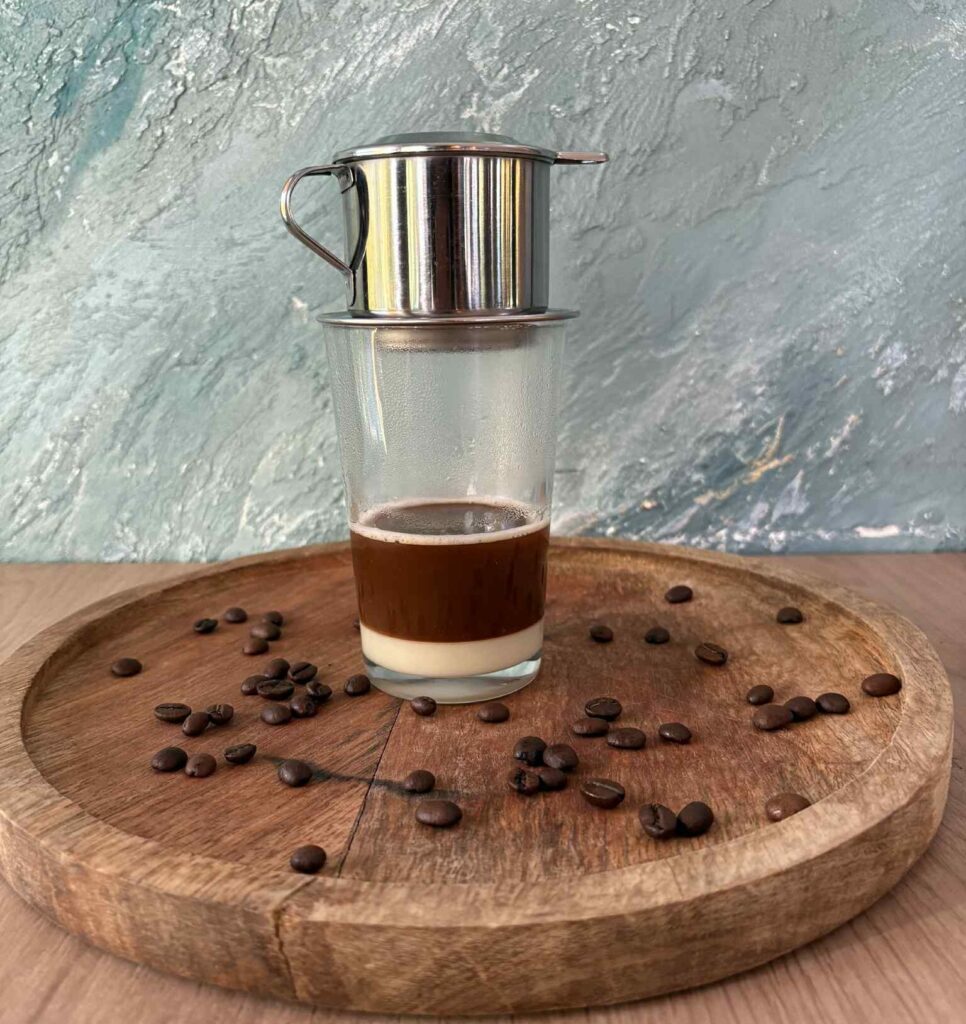
Cà Phê Phin
The first Vietnamese coffee recipe can be none other than the favorite of the Vietnamese people—and mine—the traditional Vietnamese drip coffee, Cà Phê PhinCoffee brewed this way makes the best Cà Phê Sữacoffee with condensed milk, add ice and you have a refreshing Cà Phê Sữa Đá.
The history of Phin filter dates back to the 19th century, when French colonists introduced coffee cultivation to Indochina. Initially, the French tried to introduce the textile filter and French press techniques to the Vietnamese, but it soon became clear that these methods did not suit local tastes and coffee consumption habits. This is how the Phin filterwas born, which has since become not just a simple coffee-making device, but part of Vietnamese culture, lifestyle, and everyday life.
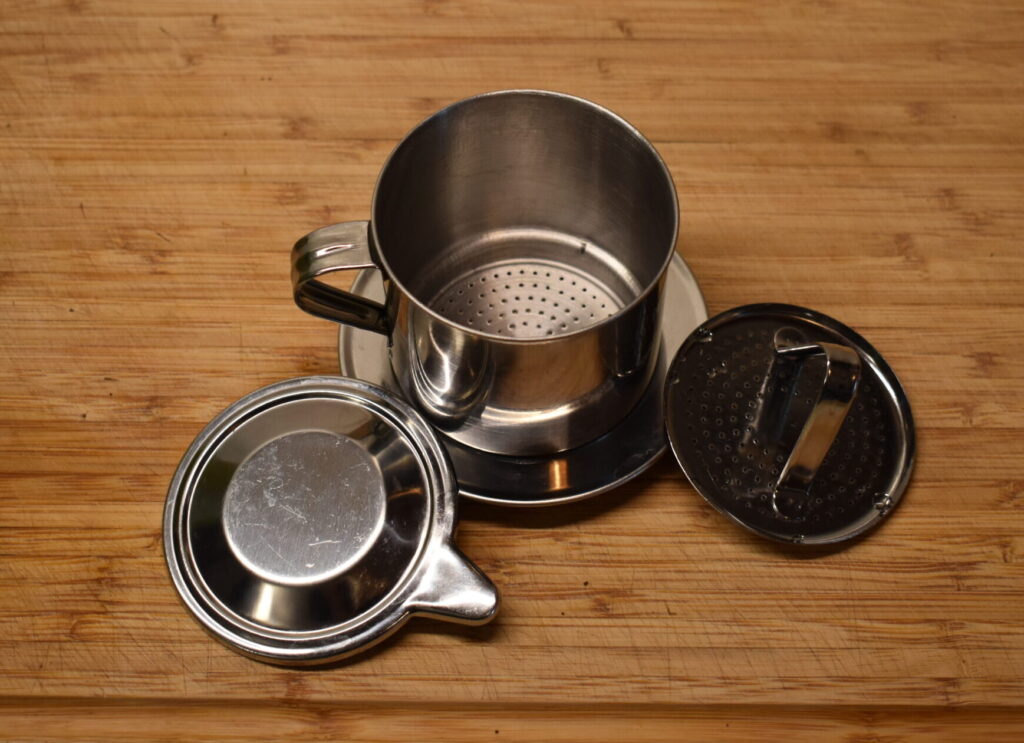
I would like to share this recipe with you so that everyone can make it at home, even if you don't have a barista scale, grinder, thermometer, or special tool for distributing ground coffee (Wise Distribution Tool). All you need is a little attention and a Phin filter, and you can enjoy the unique flavor of Vietnam.
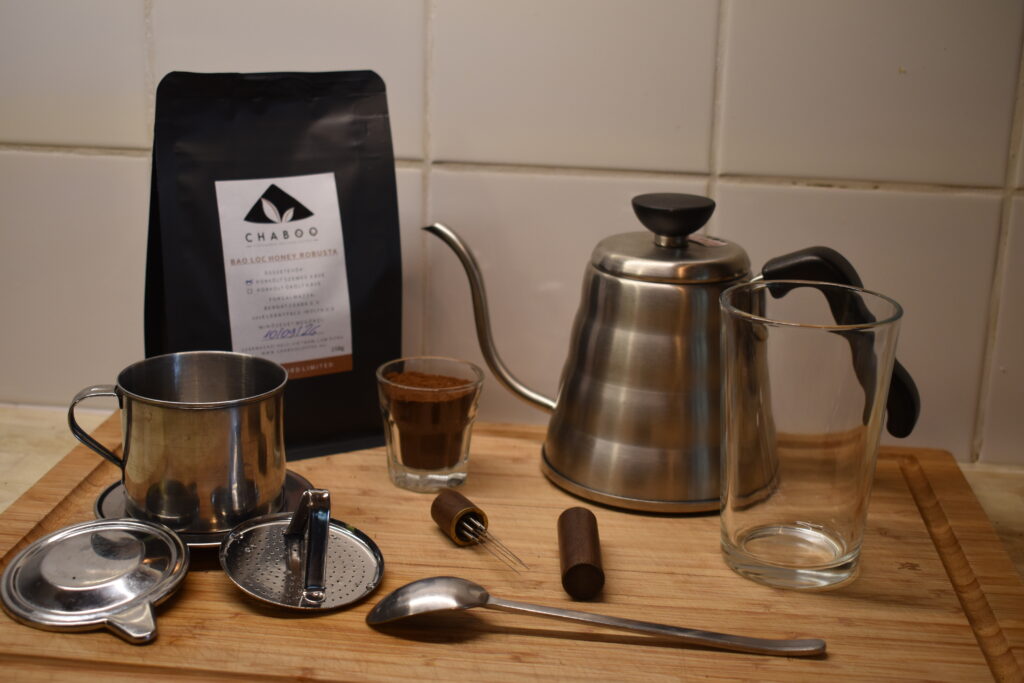
Ingredients (for 1 person):
- Phin filter
- Shot glass (0,5 dl)
- 3 dl water glass
- 1 teaspoon or WDT (Wise Distribution Tool – for distributing ground coffee)
- 1 spout, which allows you to pour a continuous, even stream of water. A swan-neck spout is best, but not essential.
- 20 g Chaboo Phin coffee ground
- If you grind it yourself, the ground should be coarser than you would use for a lever espresso machine, and slightly coarser than you would use for a Moka Pot.
- 100 ml boiled water (90–100 °C)
- Condensed milk is the classic Vietnamese flavor, but of course it will also be delicious with milk or plant-based milk, sugar, honey, or sweetener.
1. step:
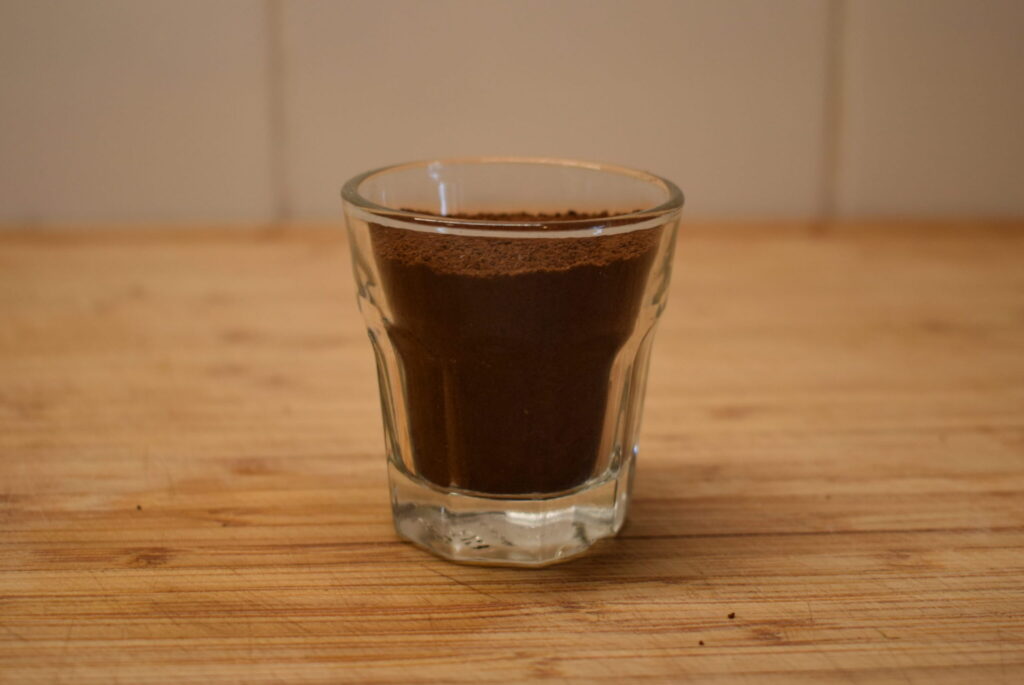
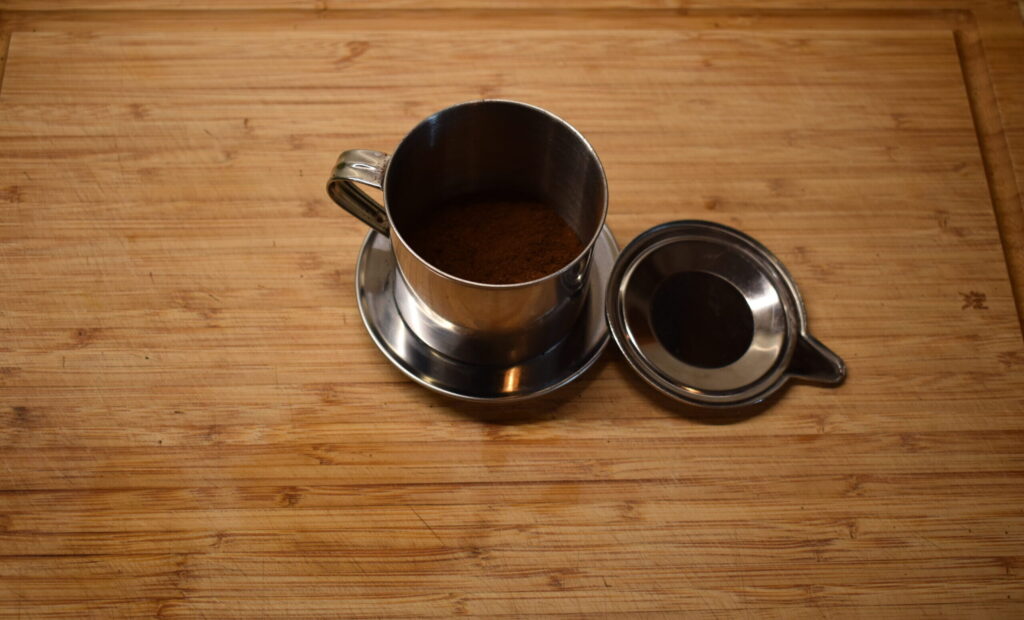
If you don't have scales, fill a shot glass with ground coffee – this is equivalent to 20 grams. I tried to find a measuring tool that can be found in every Hungarian household, as a "heaping spoon" is a rather subjective quantity. Amazing: a full shot glass is exactly 20 grams of Phin ground coffee!
2. step:
Remove the press from the Phin filter and turn the lid upside down to create a small bowl. Pour a little hot water into it to warm it up, then pour the water out of the lid after about half a minute. It is also a good idea to rinse the filter with hot water to warm it up.
Then place the filter on the inverted lid and fill it with ground coffee.
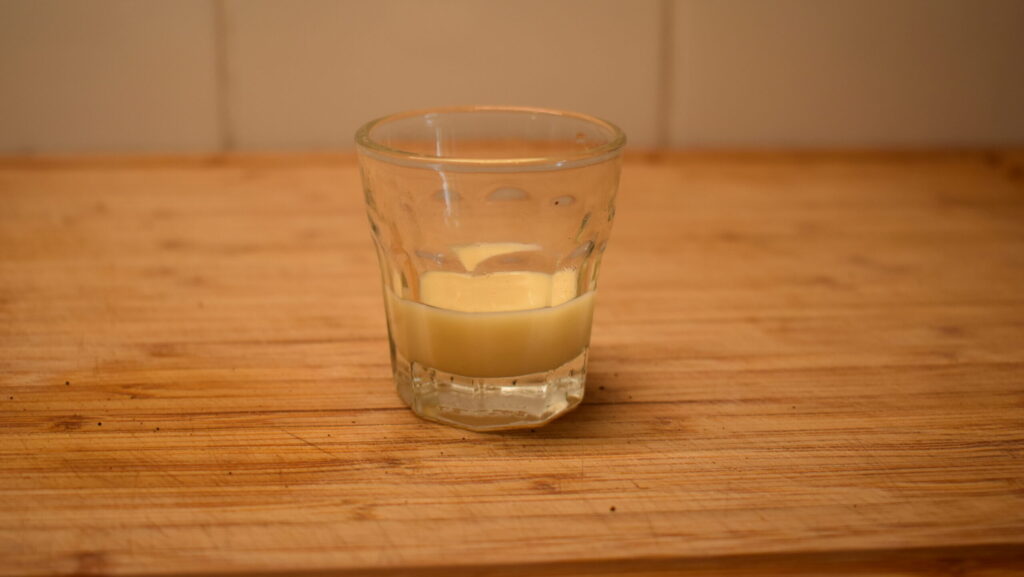
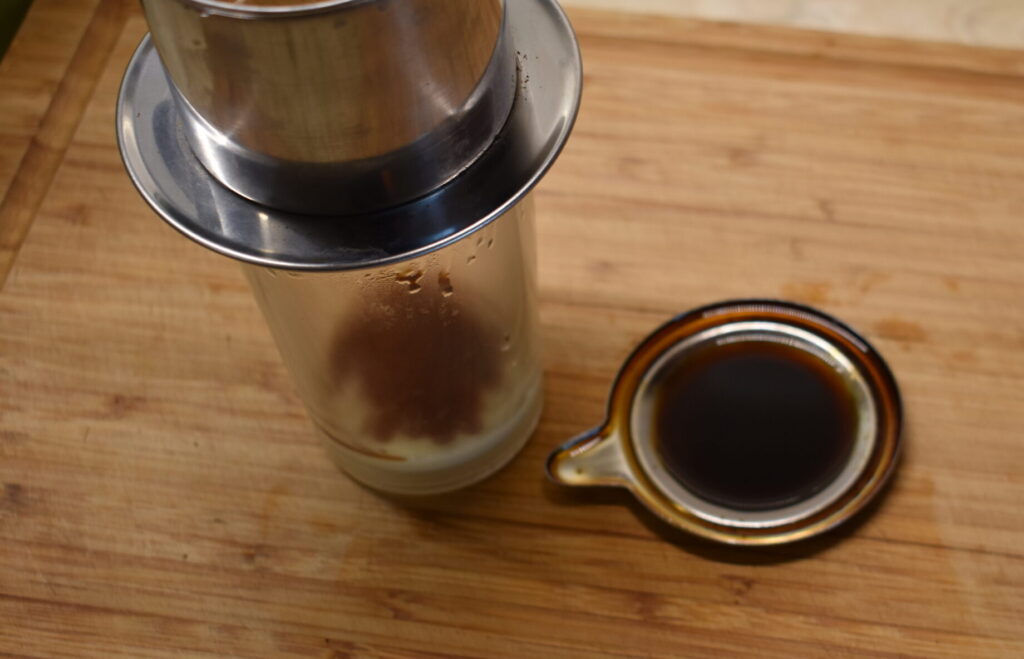
When making Cà Phê Sữa, put 15 g (about one-third of a shot glass) of condensed milk at the bottom of the 3 dl glass.
The dripping coffee does not mix with the condensed milk. The black and white layers look so good together at the end.
3.step:
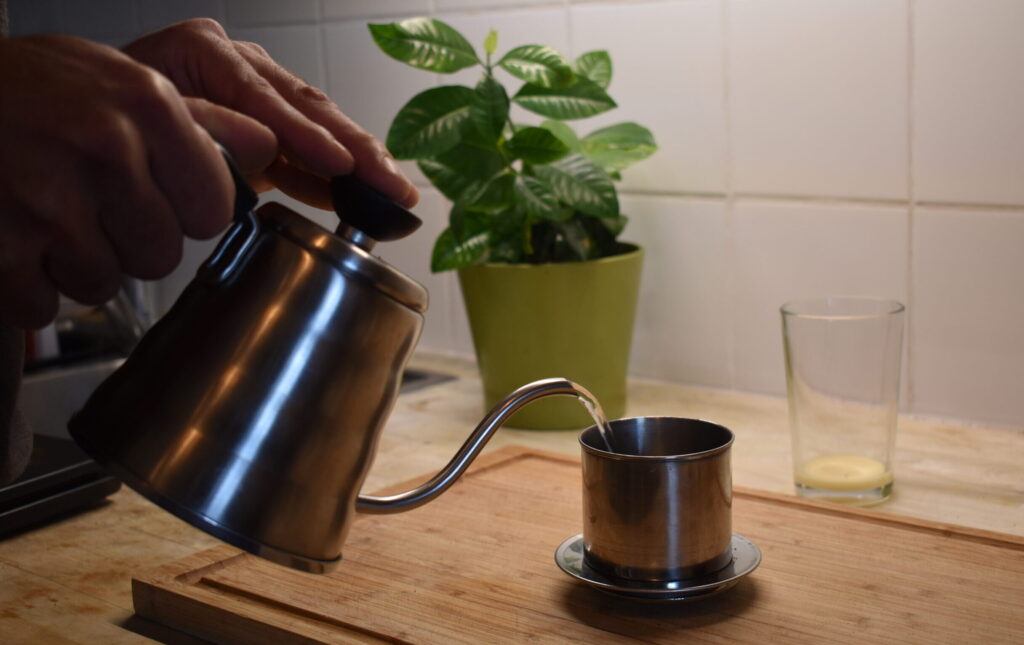
Boil water. The boiled water does not need to cool down. Pour 30 ml (about two-thirds of a glass) of water slowly in a spiral pattern with a steady, stable stream of water – be careful not to splash.
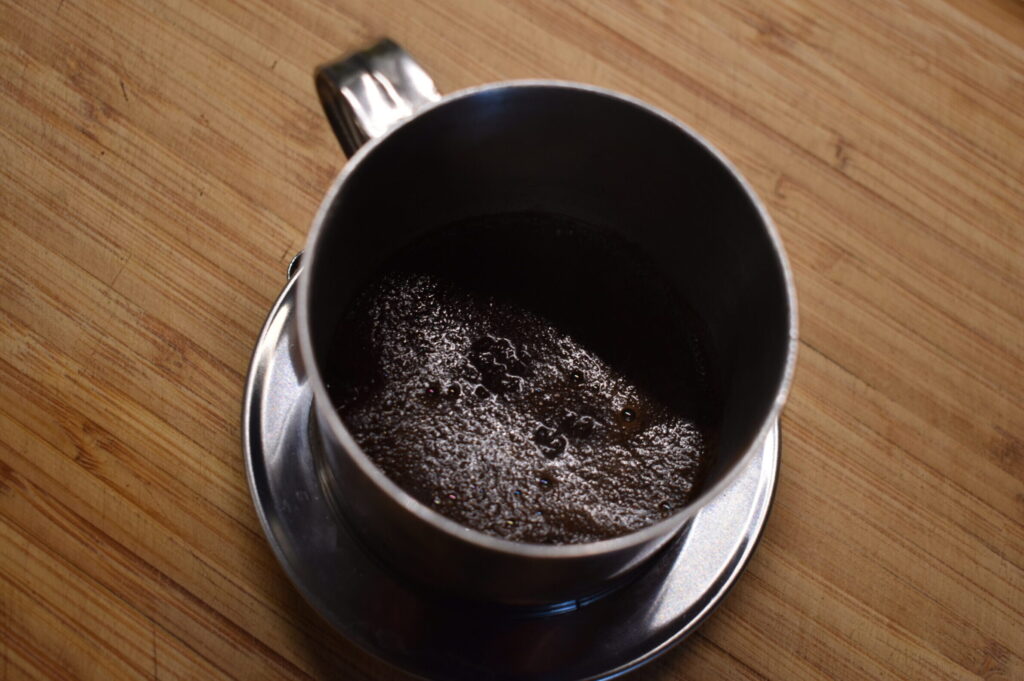
If the coffee is freshly roasted, you will see it foam slightly – this is the carbon dioxide produced during roasting escaping, which is called bloom. This is not only spectacular, but also a clear sign of the coffee's freshness. The release of carbon dioxide helps ensure even extraction, allowing the coffee's flavors to develop more clearly and fully. Wait 30–60 seconds, depending on the length of the bloom.
4.step:
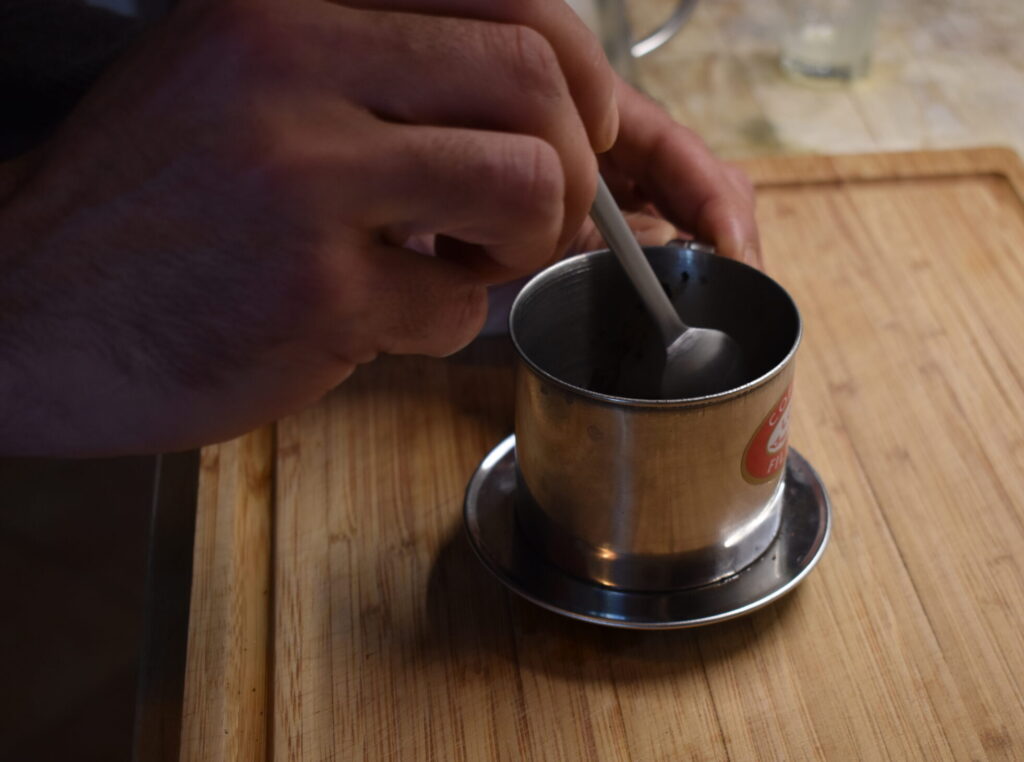
When the blooming is complete, stir the coffee gently with a small spoon or WDT using a scraping motion to ensure that no dry grounds remain in the filter. Wait 30–60 seconds, depending on the length of the bloom.
Then smooth the top to get a nice, flat surface.
5.step
Carefully remove the lid from the bottom of the filter and place the filter on the 3 dl cup. Pour the coffee collected in the lid back into the filter.
Now, you have two choices
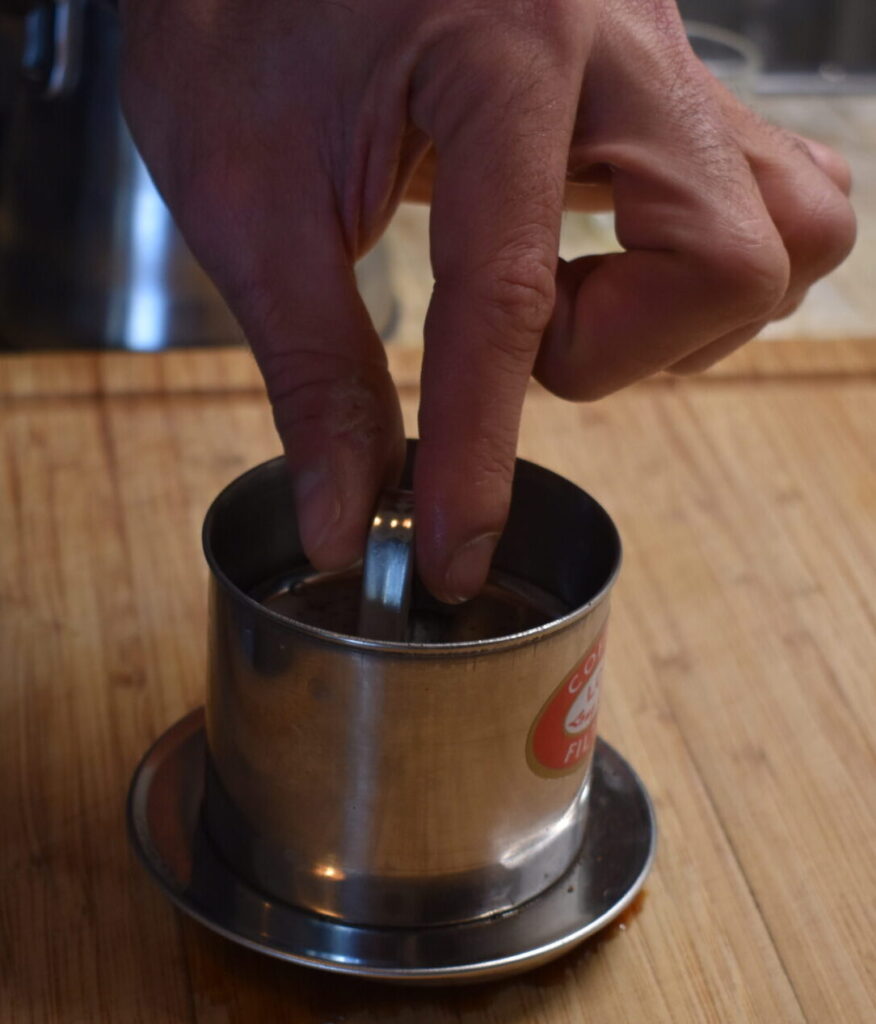
Traditionally, the pressurize tool is gently placed on top of the wet coffee and pressed down lightly.
However, I learned the technique without pressing down from my friend Dzung, which I prefer, and I always do it this way.
Using the tool can easily produce varying results—if you press it at a slight angle or with uneven force, it can affect the drip time and flavor.
6.step
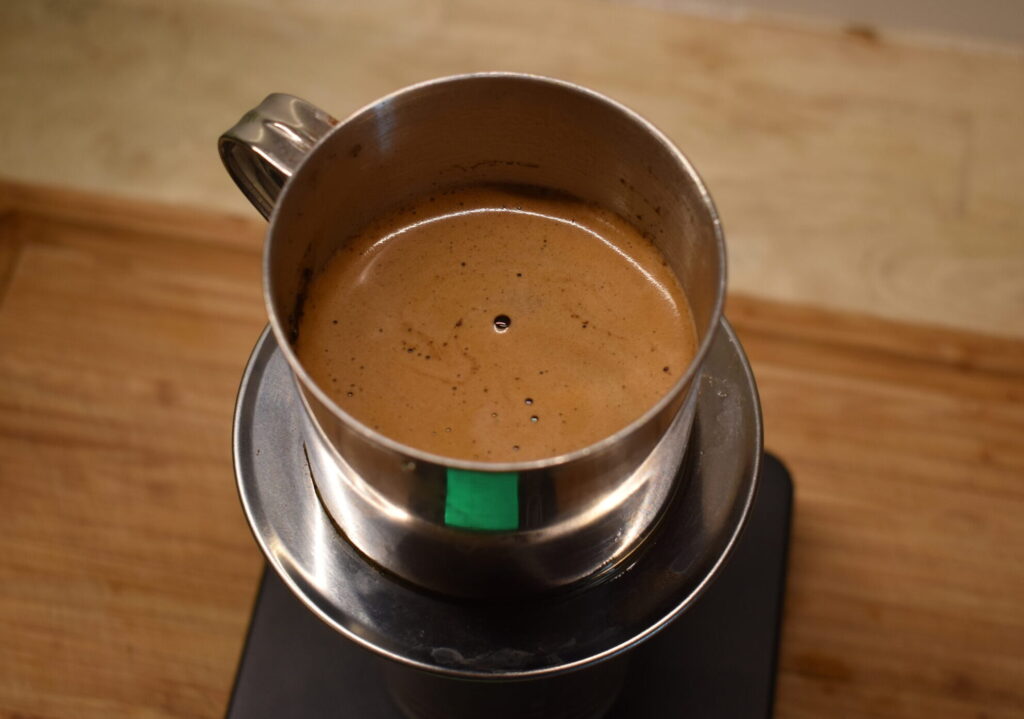
Now it's time for the second batch of water: pour the remaining 70 ml of water over your nicely mixed coffee.
Slowly, working from the outside in, pour in a spiral motion. When you reach the center, work your way back out and then back in again.
The water jet should be stable, without splashing.
A filter körülbelül félig lesz megtelve vízzel.
7.lépés:
Tedd rá a filter tetejét. Érdemes egy kis rést hagyni, mert a teljesen lezárt fedő vákuumhatást okozhat, ami miatt megállhat a csepegés.
A csepegés néha azonnal elindul, máskor pár másodpercet várni kell.
Ha 2 perc után sem indul meg, valószínűleg túl finomra őrölt a kávé, vagy az első vízadag nem keveredett el megfelelően.
Ilyenkor finoman mozgasd meg a filtert (tető nélkül), és nagyon óvatosan mozdítsd meg a kávét egy kiskanállal. Ha ezután sem indul meg, akkor túl fnom az őrlés.
Az ideális csepegési idő 20 g kávé esetén 5–10 perc. Ha túl gyorsan vagy túl lassan csepeg le, az ízvilág is megváltozik — általában keserűbb lesz. Az őrlési fokozat finom állításával lehet hangolni a csepegési időt, ha magadnak őrlöd. Két személyes adag (40 g kávé) esetén a csepegés hosszabb is lehet, mint 10 perc.
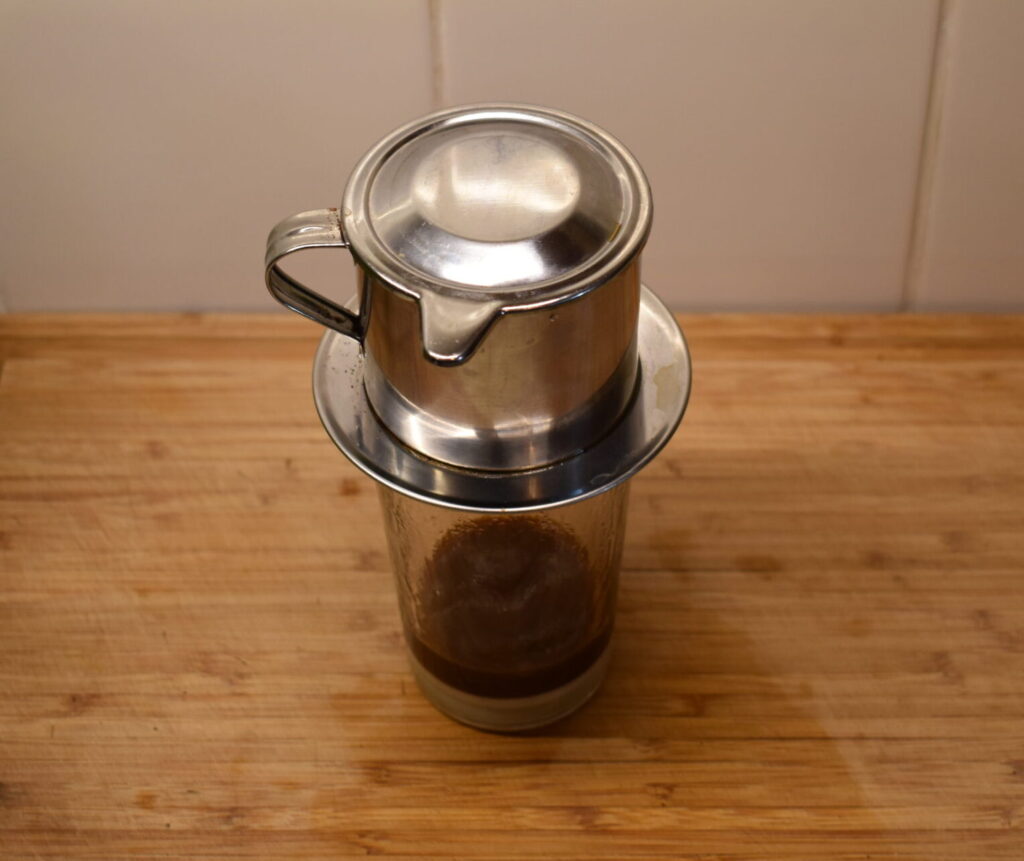
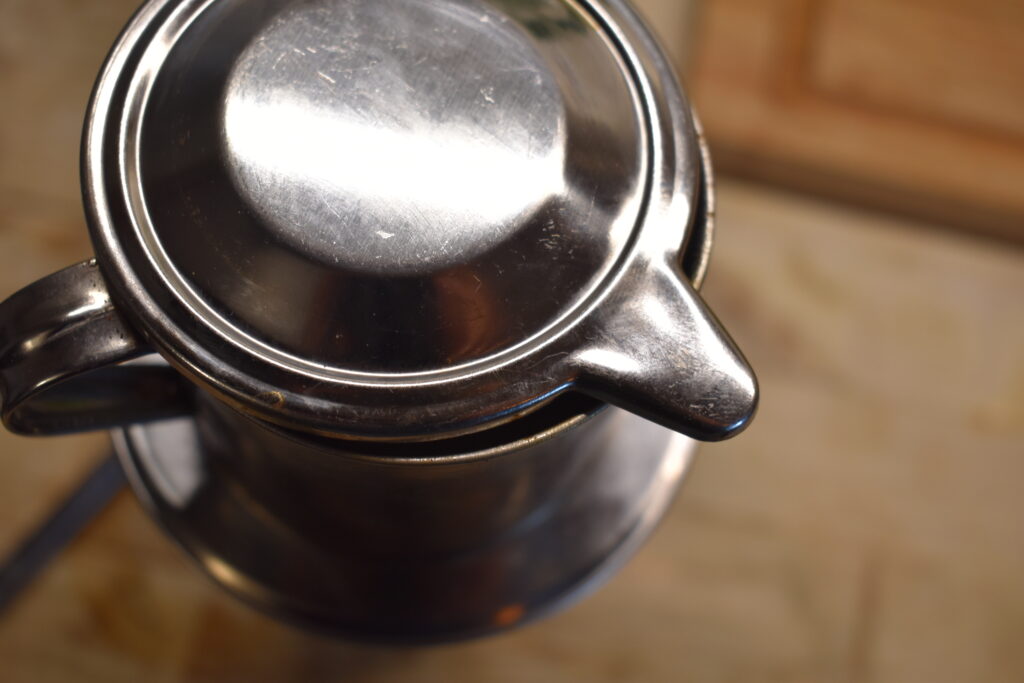
8.lépés:
Kész vagy — már csak várnod kell, amíg lecsöpög a kávé.
Addig ülj le egy kicsit, dőlj hátra, hallgasd a csepegést, és élvezd a pillanatot. A frissen csepegtetett vietnámi Cà Phê Phin nemcsak kávé, hanem rituálé, élmény és életérzés.